Quick Facts
- Topic: AI and machine learning trends
- Timeframe: 2026 outlook
- Coverage: Technology, business, research
- Focus areas: Models, governance, efficiency, edge use
- Best for: Teams tracking AI adoption
- Last updated: 2026
Artificial intelligence and machine learning are now embedded across software systems, research environments, and digital services. As adoption increases, the focus in 2026 is shifting from experimentation toward stability, efficiency, and controlled use.
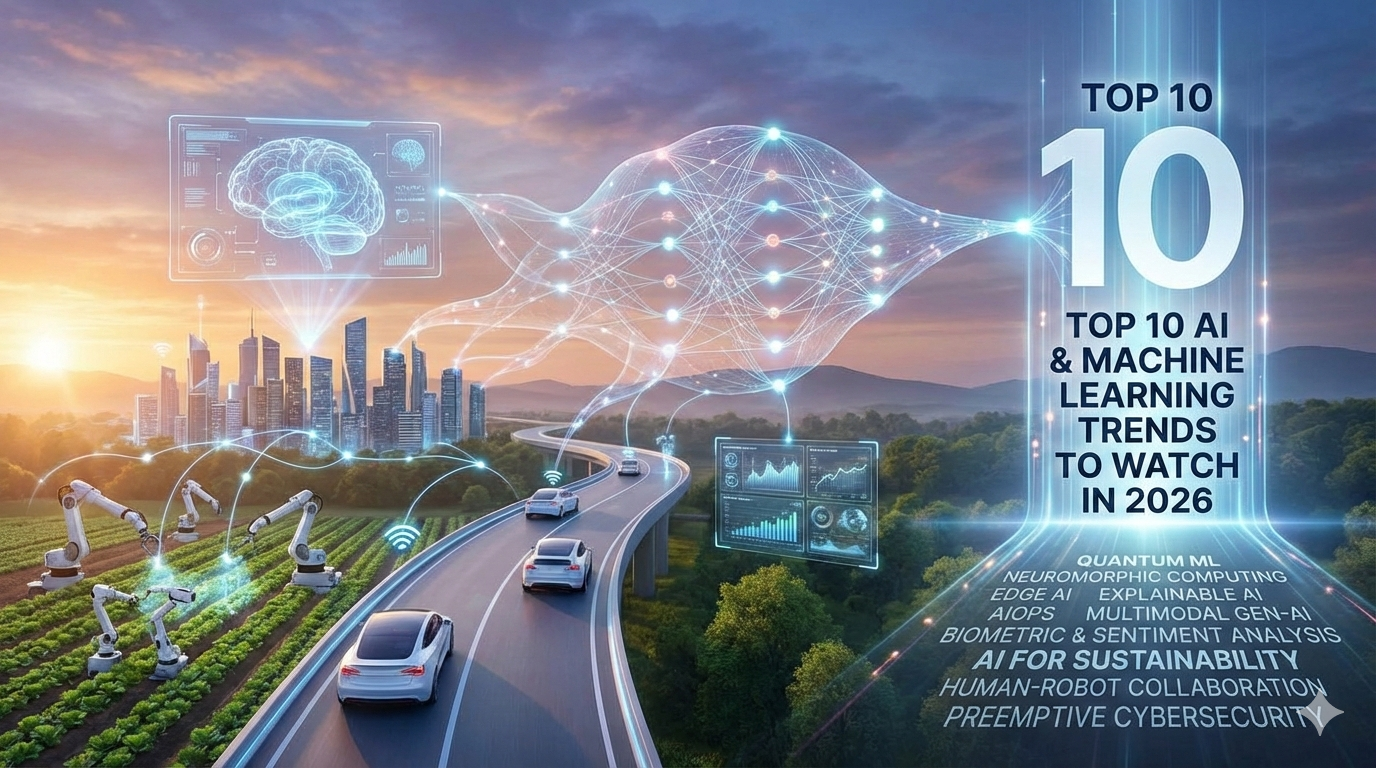
This article outlines ten AI and machine learning trends shaping development, deployment, and governance in 2026, based on how these technologies are being used in real-world systems.
What Is the Main AI Trend Right Now?
There is no single dominant AI trend in 2026. Instead, the broader direction points toward practical deployment and operational control.
Organizations are placing greater emphasis on AI systems that integrate into existing workflows, operate within regulatory limits, and deliver consistent results. This explains the growing interest in task-based AI systems, smaller models, and domain-specific tools rather than general-purpose experimentation.
1. Wider Use of Autonomous Task Systems
AI systems are increasingly designed to complete sequences of tasks rather than isolated actions. These systems can plan steps, execute actions, and adjust based on outcomes within defined boundaries.
In 2026, autonomous task systems are being used to support data analysis, operational planning, and software workflows, with human oversight remaining a core requirement.
2. Multi-Input AI Systems Become Common
AI models that process text, images, audio, video, and structured data together are becoming standard on many platforms.
These systems allow software to interpret multiple data types in a single environment, reducing reliance on separate tools. Platforms such as Google Gemini AI are often referenced when discussing this direction.
3. Smaller Models Gain Practical Importance
Smaller language and prediction models are seeing wider adoption due to lower hardware requirements and faster response times.
In 2026, these models are commonly deployed on mobile devices, industrial systems, and edge hardware, where local processing improves speed and data control. Tools like DeepSeek AI reflect this shift toward lower-cost development and deployment.
Trending Topics in AI Heading Into 2026
Several AI topics continue to receive attention as adoption matures:
- Task-based AI systems with defined limits
- Multi-input models handling text, visuals, and data together
- Smaller models running locally on devices
- Industry-focused models trained for specific use cases
- Governance-driven development and compliance
- Efficiency-focused system design
Enterprise-focused platforms such as H2O AI are often explored in these discussions.
4. AI Support in Scientific Research Expands
Machine learning is increasingly used to assist research rather than replace it. AI systems help analyze large datasets, identify patterns, and suggest research directions.
In 2026, AI-assisted analysis is expected to remain a support layer in medicine, materials research, and climate studies, with human validation remaining central.
5. Clearer AI Rules and Compliance Requirements
Governments and regulatory bodies are publishing clearer guidance on AI use, particularly in areas involving personal data and automated decisions.
Organizations are responding by improving documentation, testing processes, and accountability measures to meet compliance requirements.
6. Synthetic Data Use Increases
Synthetic data is being used when real-world data is limited, sensitive, or difficult to collect. These datasets are designed to reflect real patterns without exposing individual records.
Healthcare, finance, and security systems are increasingly using synthetic data to support training and testing in controlled environments.
Upcoming AI Trends to Monitor
Several developments are expected to gain wider adoption through 2026:
- Increased use of synthetic datasets for model training
- More AI systems running locally on consumer devices
- Higher demand for transparent and auditable outputs
- Wider use of AI in regulated industries
Earlier coverage in AI and Machine Learning Trends 2025 provides context for how these shifts are evolving.
7. Focus on Lower Power Consumption
Energy use and infrastructure cost are becoming central considerations in AI deployment.
In 2026, efficiency is influencing system selection as much as performance, particularly for large-scale or continuous-use environments.
8. More Personalized AI Systems
AI systems are increasingly tailored to individual users based on interaction history and preferences.
Many personalization features now operate locally on devices, reducing reliance on external data transfer and improving user control.
9. Human and AI Collaboration Models Improve
Rather than replacing people, AI systems are being designed to support decision-making and creative workflows.
This approach is common in writing, research, software development, and design, where AI assists with analysis and drafting while humans retain judgment and responsibility. Tools such as Perplexity AI are often referenced in research-driven workflows.
10. Growth of Domain-Specific AI Models
AI models trained for specific industries are becoming more common.
In 2026, models focused on healthcare, law, finance, and engineering are expected to provide more reliable results within their domains than general-purpose systems.
How These AI Trends Compare to 2025
Many topics from 2025, including generative systems and personalization, continue into 2026. The difference lies in how they are applied.
In 2026, AI tools are evaluated based on integration effort, operating cost, and governance readiness rather than novelty alone.
Frequently Asked Questions About AI Trends
A: Current AI trends focus on practical deployment, smaller models, task-based systems, and industry-focused tools.
A: New tools continue to appear, but adoption cycles are slowing as organizations focus on stability and long-term use.
A: Yes, though it is increasingly used as a support layer rather than a standalone solution.
A: Governance requirements, efficiency improvements, and integration with existing systems.
Final Thoughts (2026)
AI and machine learning are moving further into core digital infrastructure. In 2026, attention is centered on reliability, efficiency, and responsible use rather than rapid experimentation.
Organizations that evaluate tools carefully and focus on real-world applications are better positioned for sustained adoption.
Disclaimer:
Information on AIListing.ai is based on research and public sources available at the time of writing. Accuracy and completeness cannot be guaranteed, as tools, features, and policies may change.
All images, logos, and trademarks belong to their respective owners and are shown for informational purposes only. AIListing.ai is not affiliated with or endorsed by any organization unless clearly stated.